Why that matters in the glass.
The lime, sweetness, and body are already working together. From there, the drink maker can focus on the spirit, dilution, and final seasoning.

A cocktail cordial is a prepared ingredient with flavor and sweetness already built in, and it may also contribute acidity or texture. Cordial Craft Zero-Sugar Lime Cordial combines the lime and sweetener portions of a classic cocktail, so margaritas, gimlets, daiquiris, and highballs need fewer separate ingredients without tasting like a shortcut.
A cocktail cordial is a measured drink ingredient built around a defined flavor, usually with sweetness already integrated. Some formulas also contribute acidity, aroma, or texture. Cordial Craft is a non-alcoholic lime cordial designed to cover the separate lime and sweetener roles in many lime-forward cocktails.
Plain syrup mainly sweetens. A cocktail cordial can have a broader job, depending on its formula: carry a defined flavor, integrate sweetness, and sometimes contribute acidity, aroma, or texture.
The lime, sweetness, and body are already working together. From there, the drink maker can focus on the spirit, dilution, and final seasoning.
Terminology note: “Cordial” can refer to an alcoholic liqueur. In contemporary non-alcoholic cocktail use, it can also describe a prepared fruit or citrus ingredient with sweetness built in; the formula determines whether it supplies acidity or texture as well. See the TTB’s U.S. beverage-alcohol definition of liqueurs and cordials.
Fresh lime brings acidity and aroma. Simple syrup softens that acidity and adds body. Cordial Craft handles both parts in one zero-sugar pour.
Fresh lime brightens the drink, adds aroma, and helps cut through sweetness and alcohol.
Simple syrup rounds off the sharp edges and gives the drink a smoother texture.
One ingredient that takes the place of both in the recipe.
Cordial Craft is a lime cordial, not bottled lime juice or simple syrup. In recipes that normally call for both, it can replace the pair with one pour, bringing lime brightness, sweetness, and body without sugar.
These ingredients are not interchangeable by name alone. Compare the job each one performs, the amount a recipe uses, the preparation it requires, and the storage guidance attached to that product or house method.
It brings sweetness and body, while citrus or another acid source usually comes from elsewhere in the recipe.
It contributes lime aroma and acidity, but it does not include a built-in sweetener.
Cordials, sour mixes, super juice recipes, mixers, and liqueurs can differ substantially. Read the label or documented house recipe.
Package size does not establish yield. The useful comparison is the approved amount used in each finished drink.
Swipe to compare categories
| Category | Sweetness / acidity role | Dilution | Preparation | Shelf / storage caveat | Consistency | Typical use |
|---|---|---|---|---|---|---|
| Cocktail cordial | Usually carries a defined flavor and sweetness; acidity depends on the formula. | Does not remove the need to chill and dilute the finished drink. | Packaged versions are ready to measure; house-made versions require a documented process. | Follow the product label or approved house recipe. | Packaged and house formulas vary, so compare specifications rather than names. | A measured flavor component in cocktails or zero-proof drinks. |
| Lime juice | Primarily citrus acidity and aroma; no built-in sweetener. | The cocktail still needs dilution through shaking, stirring, water, or soda. | Juice fresh fruit or use a packaged product. | Fresh and packaged juice have different handling rules; use an approved food-safety procedure. | Fresh fruit varies; packaged products have their own specifications. | Sours, highballs, and recipes that call for direct citrus. |
| Simple syrup | Sweetness and body, without citrus acidity. | Contains water, but the cocktail still needs its intended mixing dilution. | Mix to a defined ratio or buy a packaged syrup. | Follow the product label or documented house storage rule. | Depends on the sugar-to-water ratio and measurement. | Balancing citrus, coffee, tea, spirit-forward drinks, and other recipes. |
| Sour mix | Usually combines sweet and sour roles; the formula may use juice, acids, flavors, or a blend. | Serving size and added water vary by product or recipe. | May be ready to pour, diluted from a base, or made in-house. | Use the label or validated house procedure; there is no universal rule. | Packaged products can be repeatable, while house batches depend on the process. | High-volume sours and mixed drinks where a combined sweet-sour base fits the program. |
| Super juice | A citrus preparation; sweetness is present only if the chosen recipe adds it. | Its preparation may include water, but the finished cocktail still needs method-specific dilution. | Requires a weighed, documented citrus process. | Use the tested recipe and the venue’s approved food-safety plan; do not assume a universal shelf life. | Depends on fruit, weights, method, and batch controls. | Bar programs seeking a prepared citrus component. |
| General mixer | Varies widely: a mixer may contribute sweetness, acidity, flavor, bubbles, or volume. | Some mixers lengthen the drink; the serving direction controls. | Usually ready to pour, though mix bases or powders require their stated preparation. | Follow the product label after opening. | Depends on the product and how it is measured. | Highballs, long drinks, and other mixed beverages. |
| Liqueur | An alcoholic, sweetened flavor component; acidity depends on the product. | Changes the drink’s alcohol and sweetness balance; final dilution still comes from the method. | Ready to measure from the bottle. | Follow the producer’s label. | A named packaged product offers a defined specification. | Modifier in cocktails or a serve on its own, depending on the product. |
| Cordial Craft | Lime character and sweetness in one non-alcoholic, zero-sugar pour. | Finish through shaking with ice or by adding soda for the approved highball build. | Measure from the bottle; start with the approved house ratio, then adjust for the full recipe. | Follow the current bottle label and approved product guidance. | One measured starting point; spirit, ice, carbonation, and other ingredients can change the finish. | Usually 0.75 to 1 oz in lime-forward cocktails and zero-proof drinks. |
Category note: U.S. beverage-alcohol rules use “liqueur” and “cordial” for a class of sweetened distilled spirits. That is not the same thing as Cordial Craft’s non-alcoholic product. Source: Alcohol and Tobacco Tax and Trade Bureau guidance.
Cordial Craft’s house baseline for many shaken lime-forward cocktails is 2 parts spirit to 1 part Cordial Craft. Use 2 oz spirit and 1 oz Cordial Craft as the measured starting point, then let ice, temperature, dilution, and the other ingredients determine the final adjustment.
Begin with 2 oz spirit and 1 oz Cordial Craft for most shaken classics.
Shake hard with ice so temperature and dilution finish the drink.
For highballs, use 0.75 oz Cordial Craft, then top with soda water.
Use a slightly smaller pour for a drier drink or adjust for spirit, ice, and glass size.
Try them as written first, then adjust for the spirit, the ice, and how dry or long you want the drink.
2 oz tequila + 1 oz Cordial Craft. Shake with ice and serve.
2 oz gin + 1 oz Cordial Craft. Shake or stir depending on style.
2 oz rum + 1 oz Cordial Craft. Shake hard with ice.
2 oz vodka + 0.75 oz Cordial Craft + soda water. Build tall over ice.
The house ratio is a starting point for classic sours, highballs, spritzes, zero-proof drinks, and batches. Change the spirit or modifiers, then taste and adjust the finish for the complete recipe.
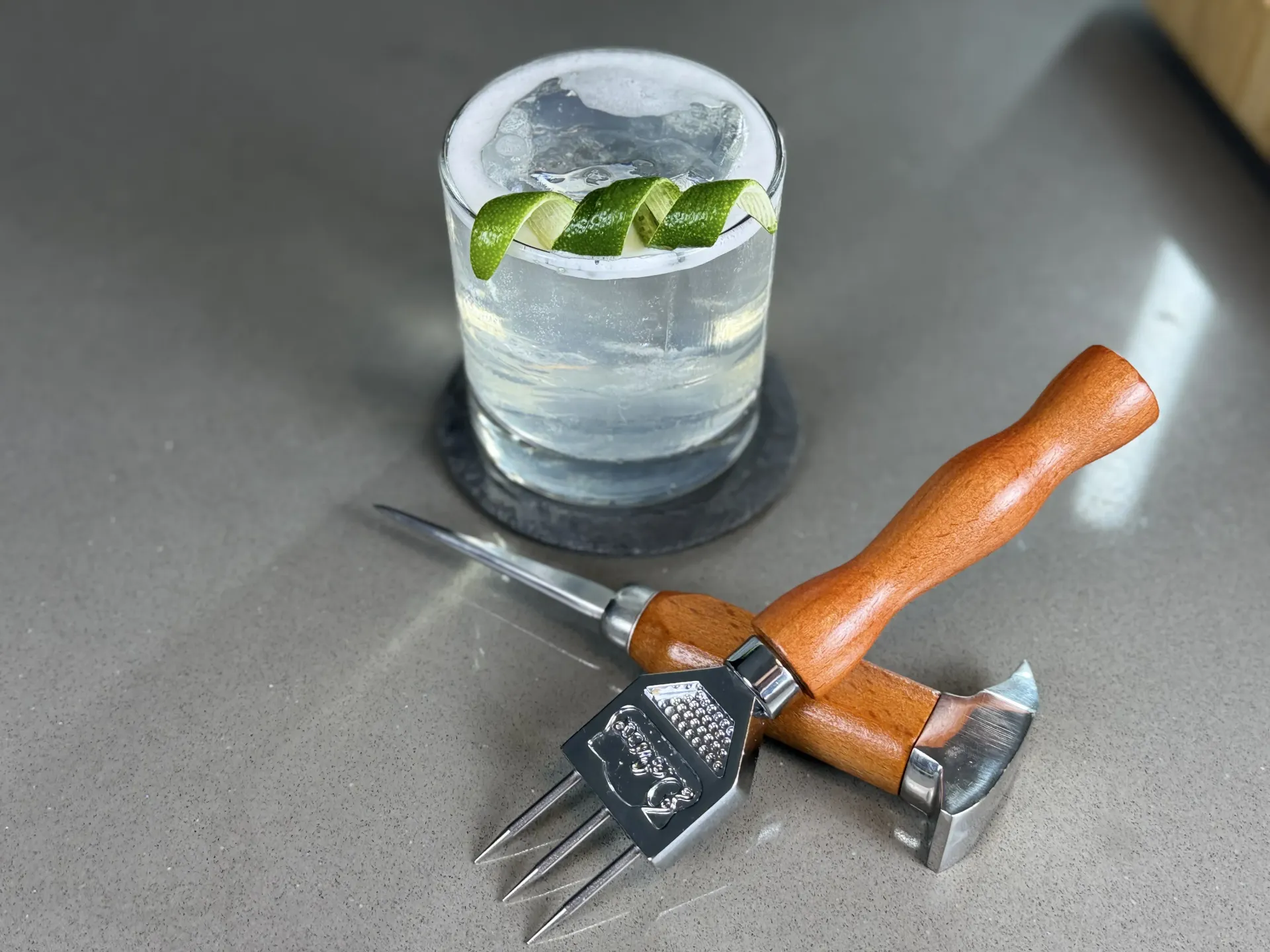
Tequila and Cordial Craft make a bright zero-sugar margarita without agave syrup or bottled sour mix.
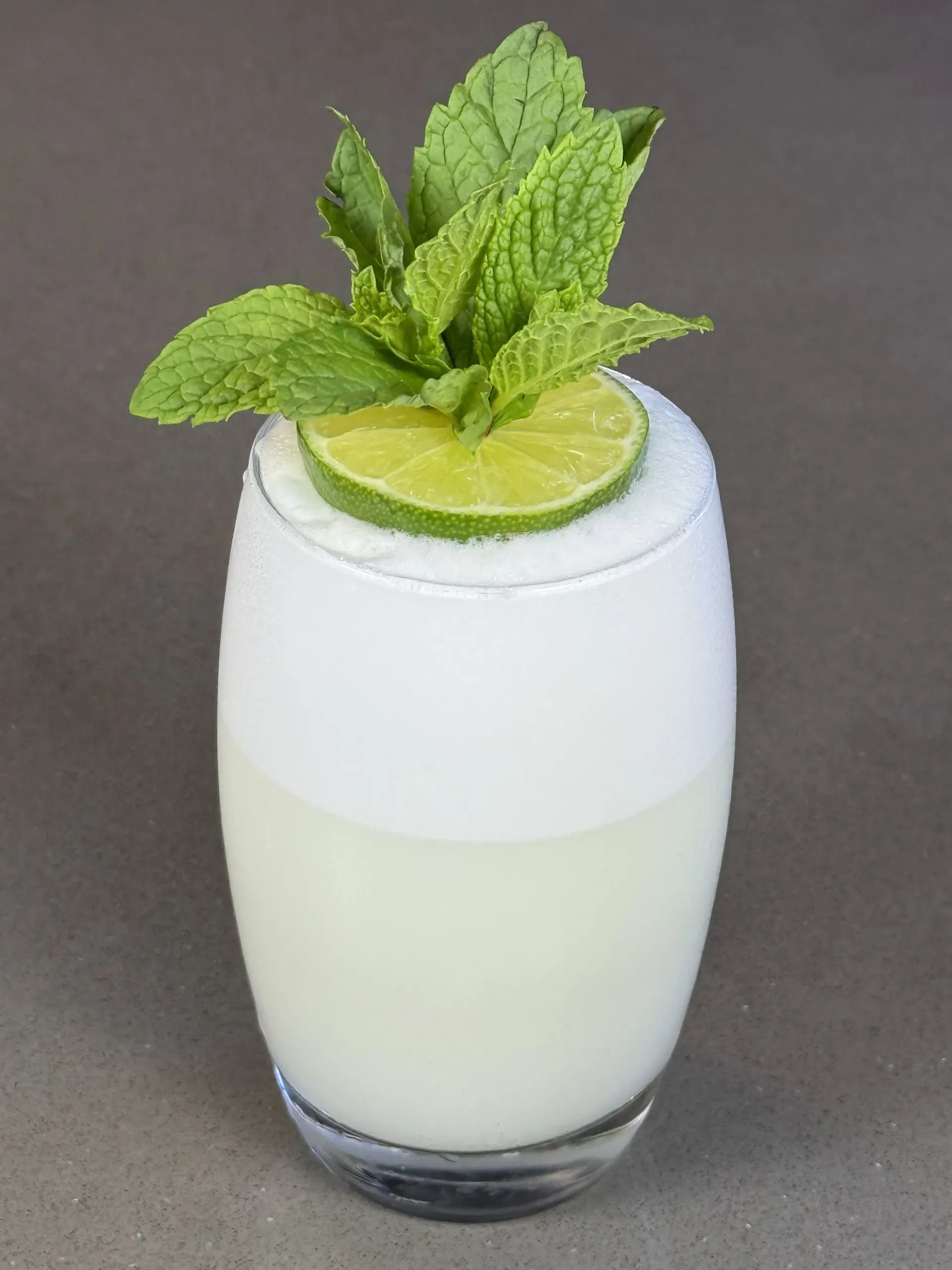
Gin, Cordial Craft, foam, and soda water make a light, lively fizz with a clean finish.
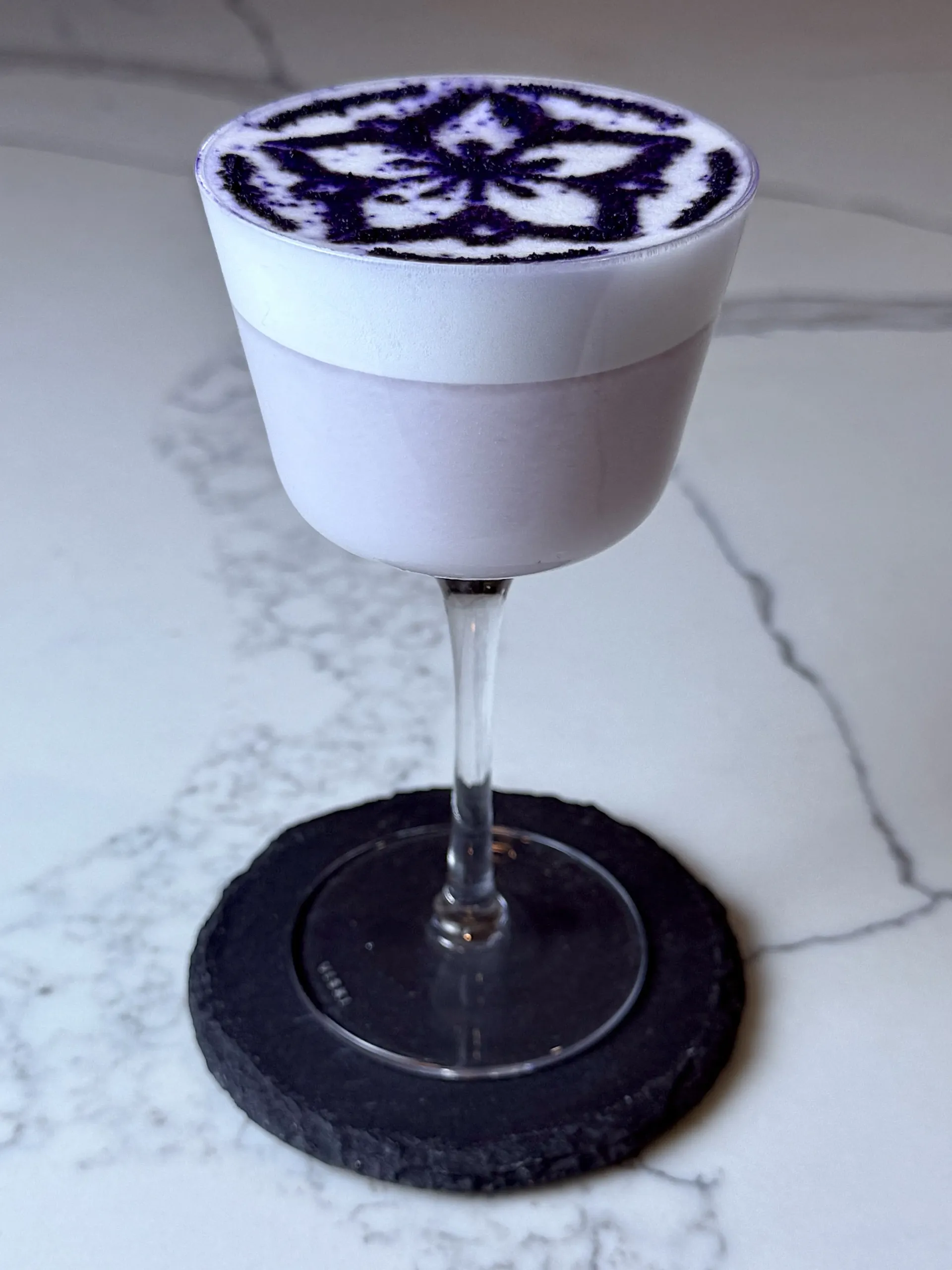
Empress Indigo Gin, Cordial Craft, and foam give this sour its color, lift, and silky texture.
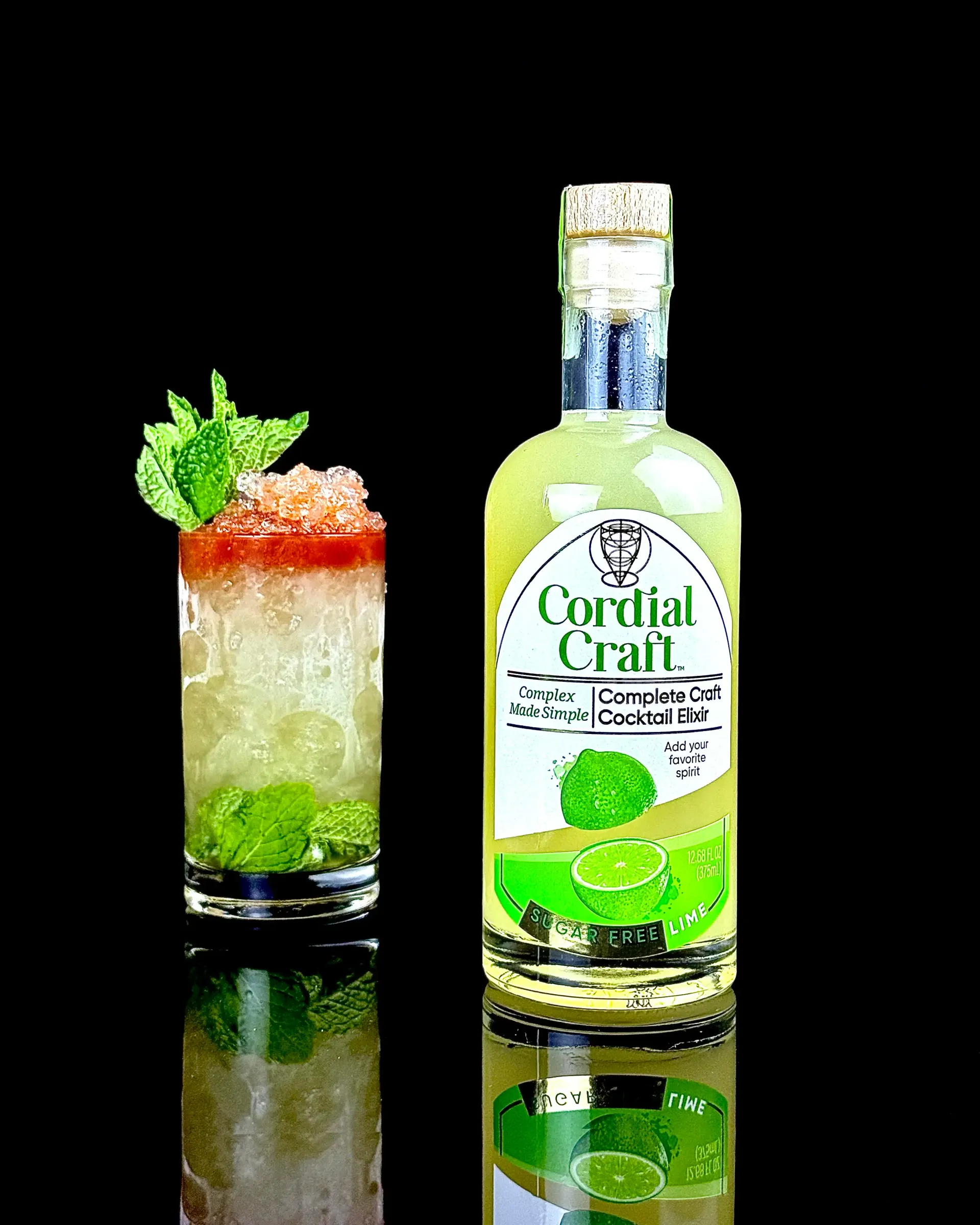
Rum, mint, bitters, and Cordial Craft show how the same ratio can carry a longer, more layered drink.
A smaller, measured pour may reduce build steps and simplify batching or training, but the actual result depends on the venue, menu, staff, service model, and approved recipe. Compare prep time, waste, serving cost, and guest response with your own documented numbers.
In one documented hotel-bar menu comparison, an $8 seltzer order was compared with a $16.50 Cordial Craft cocktail.
On that same menu, a $10 vodka soda order was compared with a $16.50 Cordial Craft cocktail.
Illustrative menu-price comparison only; not a revenue forecast. Results vary by venue, pricing, menu placement, guest behavior, recipe cost, and staff execution.
Here is how the category works and how Cordial Craft fits into a measured lime-cocktail build.
A cocktail cordial is a measured ingredient built around a defined flavor, usually with sweetness already integrated. Depending on the formula, it may also contribute acidity, aroma, or texture.
The word can refer to a sweet alcoholic liqueur, but it is also used for some non-alcoholic cocktail ingredients. Cordial Craft Zero-Sugar Lime Cordial is non-alcoholic and can be used in cocktails or zero-proof drinks.
Cordial Craft is a non-alcoholic, zero-sugar lime cordial. It is not bottled lime juice, simple syrup, sour mix, or a ready-to-drink cocktail. It is measured as a cocktail ingredient, usually 0.75 to 1 oz at a time.
Cordial Craft contains 0 g of sugar per serving. Use the current Nutrition Facts label for the serving size and complete nutrition information.
For many shaken lime-forward cocktails, start with 2 oz spirit and 1 oz Cordial Craft. For the approved sparkling highball build, start with 2 oz spirit and 0.75 oz Cordial Craft, then top with soda water. Adjust for the other ingredients, ice, glass, and intended finish.
It is the Cordial Craft house baseline for recipes where the product covers the lime and sweetener roles. It is a starting point, not a universal rule; fruit, liqueurs, flavored spirits, ice, and carbonation can all shift the balance.
Use the approved house builds for margaritas, gimlets, daiquiris, Collins-style highballs, sours, spritzes, batches, and zero-proof drinks, then adjust for the complete recipe.
Hospitality teams can test Cordial Craft within their own prep, training, batching, and service systems. Use the wholesale pathway for program details, and validate any labor, cost, yield, or consistency benefit with venue-specific data.
Nutrition note: nutrient amounts on a Nutrition Facts label apply to the listed serving size. Source: U.S. Food and Drug Administration, How to Understand and Use the Nutrition Facts Label. This source explains label reading; it does not independently verify Cordial Craft’s product data.
Use the detailed how-to guide for technique, browse recipes for applications, shop when you are ready to make one, or learn about the bartender-built company behind Cordial Craft.