Skinny Margarita Calories: Why Agave Syrup Makes It Worse

Skinny Margarita Calories: Why Agave Syrup Makes It Worse
The science behind agave's fructose content reveals why 'skinny' cocktails often contain more sugar than traditional recipes.
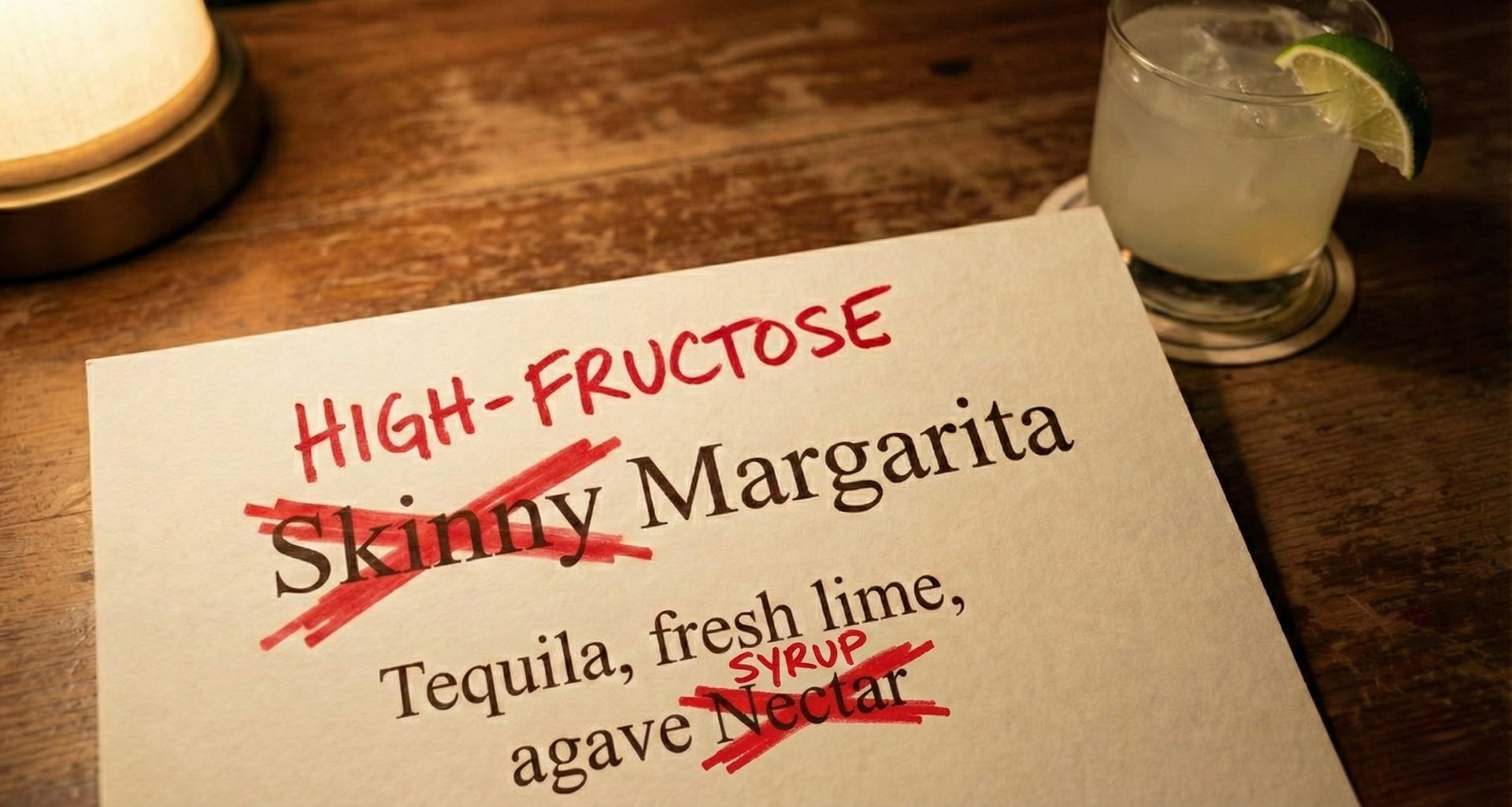
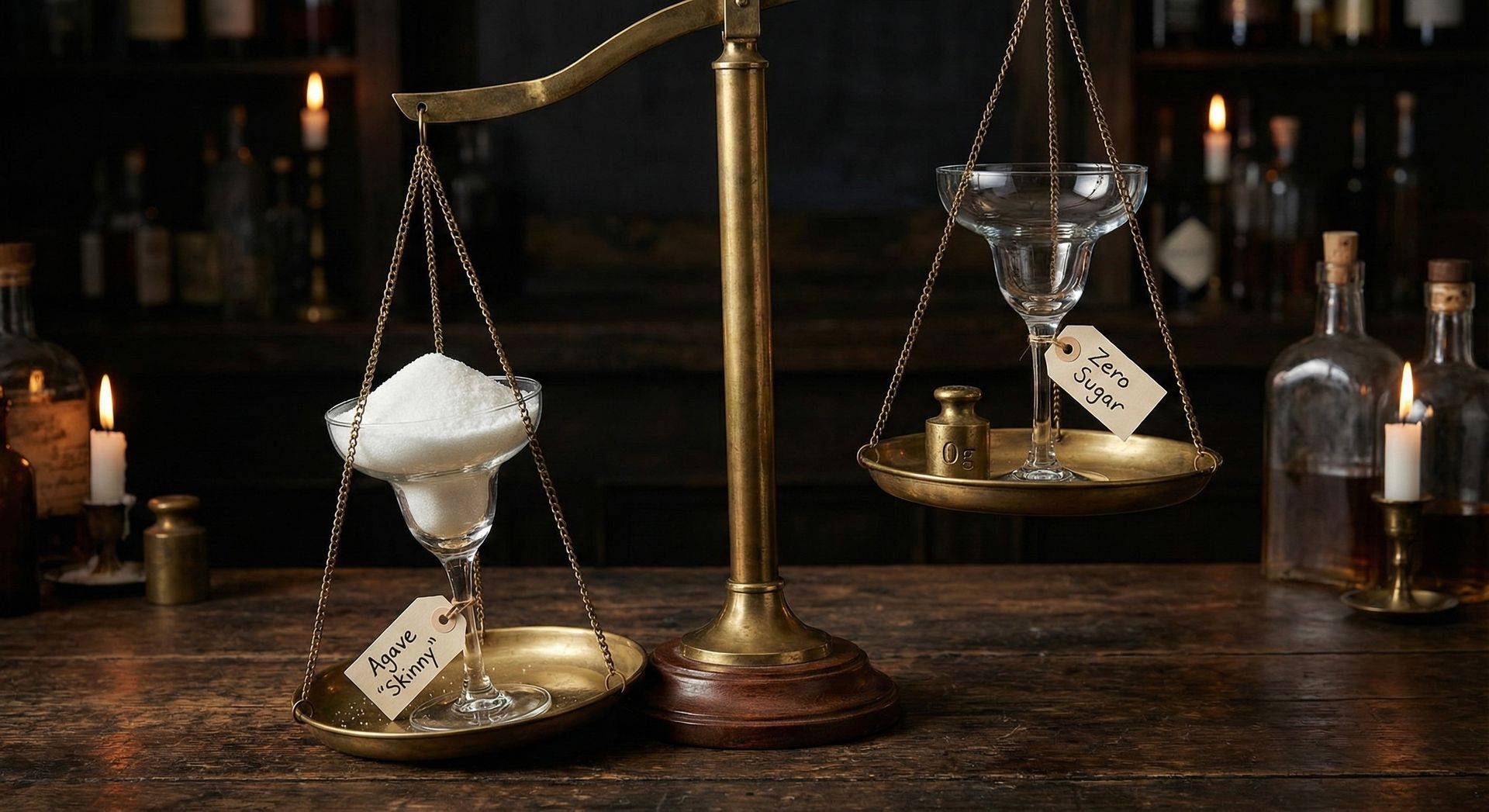
The "skinny margarita" is a lie served in a salt-rimmed glass. What guests think they're getting: a lighter, healthier choice. What they're actually drinking: 17 grams of sugar from a syrup higher in fructose than high-fructose corn syrup itself.
"Skinny" isn't describing the drink. It's describing the margin of truth in the marketing.
Today's guests read labels. They screenshot ingredient lists. They share what they find. The guests ordering "skinny" drinks are exactly the ones who will feel deceived when they learn the truth.
In hospitality, the truth always comes out.
What Agave Syrup Really Is
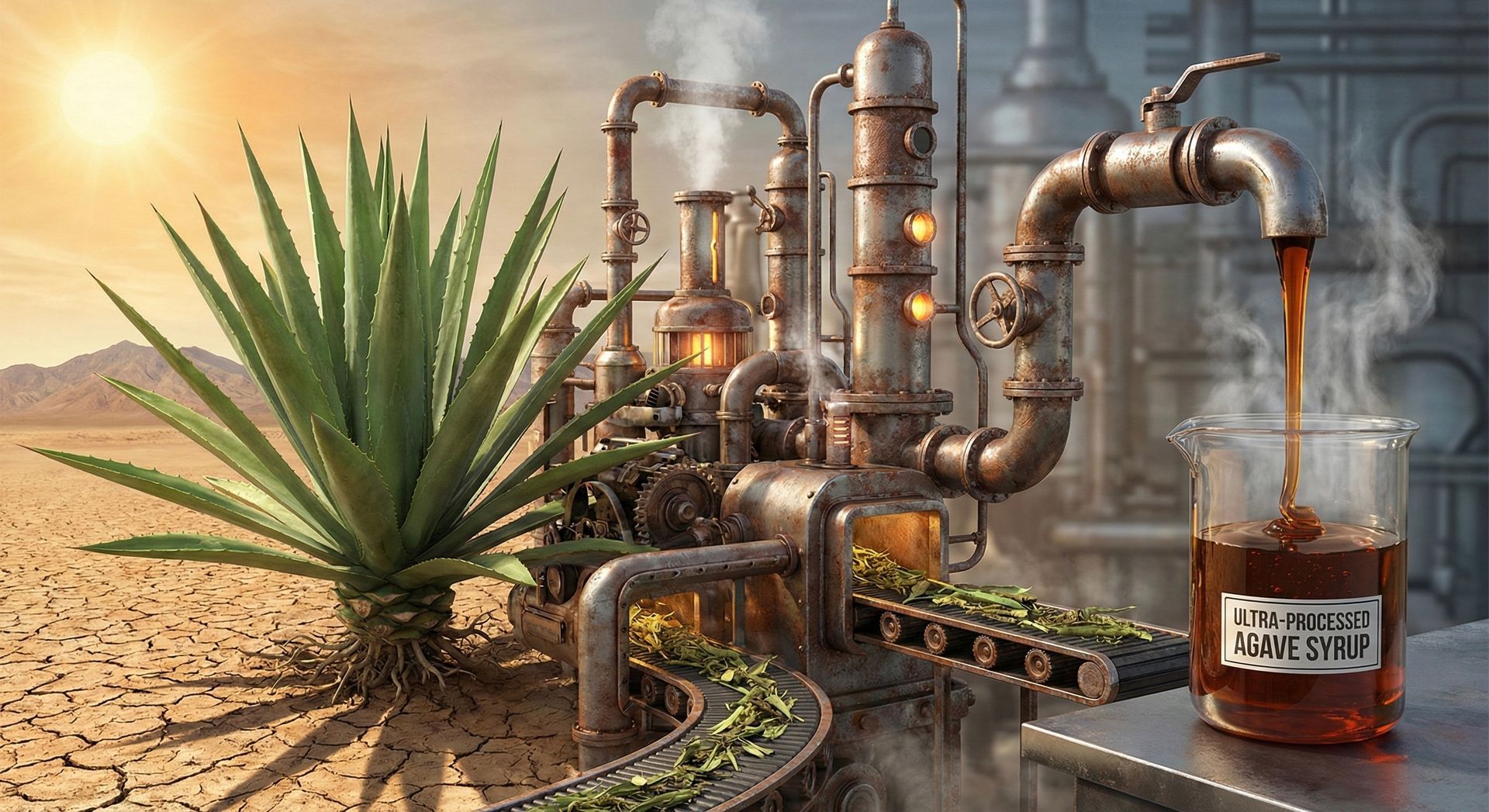
The deception begins with the name itself. The product sold as "agave nectar" is not actually nectar. Nectar, by definition, is what flows directly from the plant, raw and unprocessed. The moment you filter it, heat it, and treat it with enzymes, you've processed a syrup.
Every bottle of "agave nectar" on store shelves is syrup. The word "nectar" is there to make you feel better about buying it.
Agave syrup doesn't exist in nature.
It never has. Honey comes from bees. Maple syrup comes from trees. Agave syrup comes from factories. What the plant actually produces is aguamiel, a thin watery sap that looks nothing like the golden syrup on store shelves. Transforming one into the other requires industrial processing closer to corn syrup production than to anything natural. This isn't harvesting. It's manufacturing.

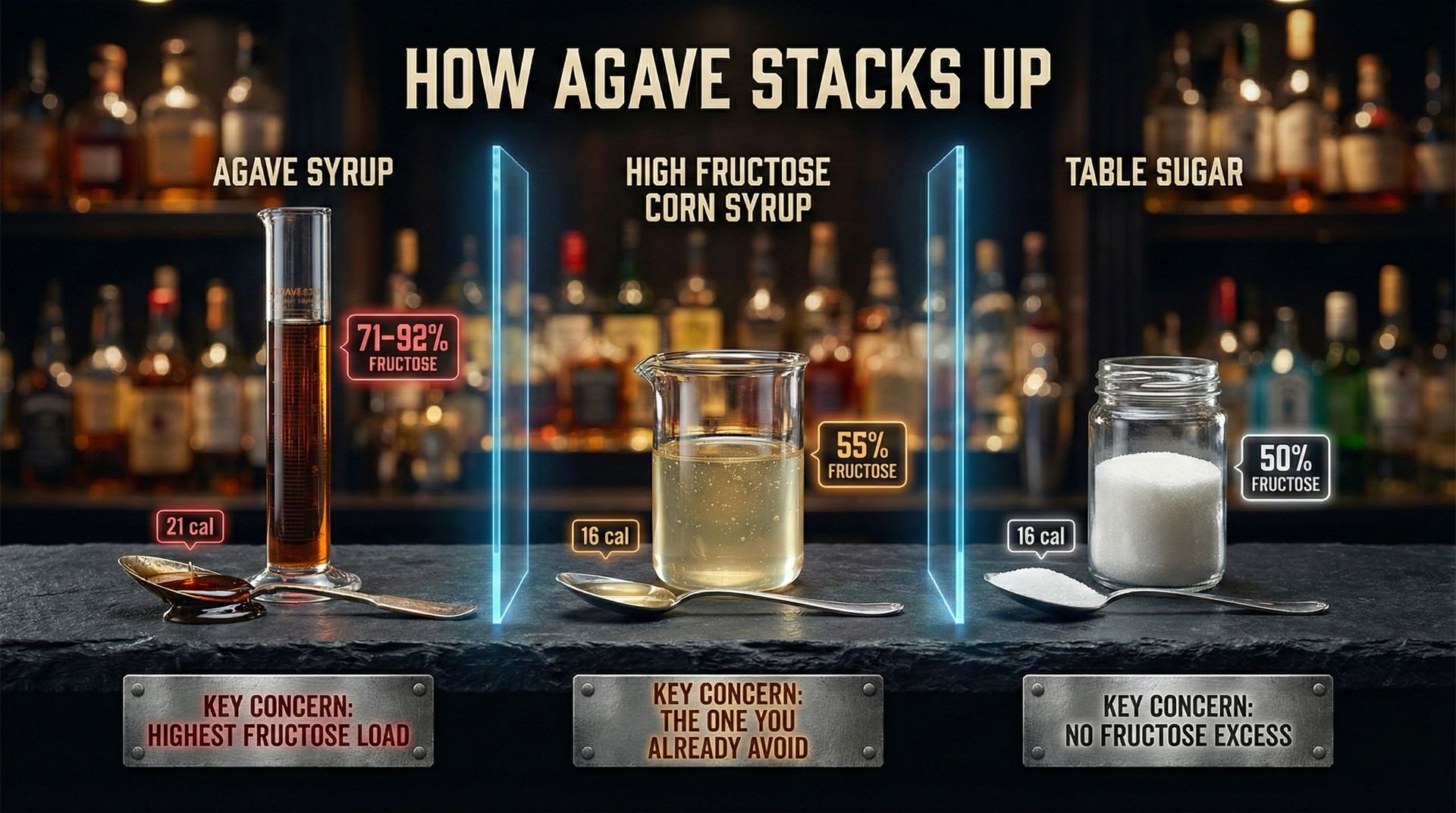
Marketing wants you to picture agave nectar oozing naturally from the plant. The reality: a product that contains 71 to 92 percent fructose and only 4 to 15 percent glucose, a ratio that can exceed 10:1.
That's nothing like the raw plant's sap, which is mostly complex carbohydrates. Industrial production breaks down the plant's original nutrients and antioxidants. The more processing, the more fructose. The "natural" and "raw" labels on many agave products are misleading at best.

Bartenders reach for agave thinking it's the healthier option. It's not. It's the highest-fructose sweetener available, with 30 percent more calories per teaspoon than granulated sugar.
Why Fructose Matters
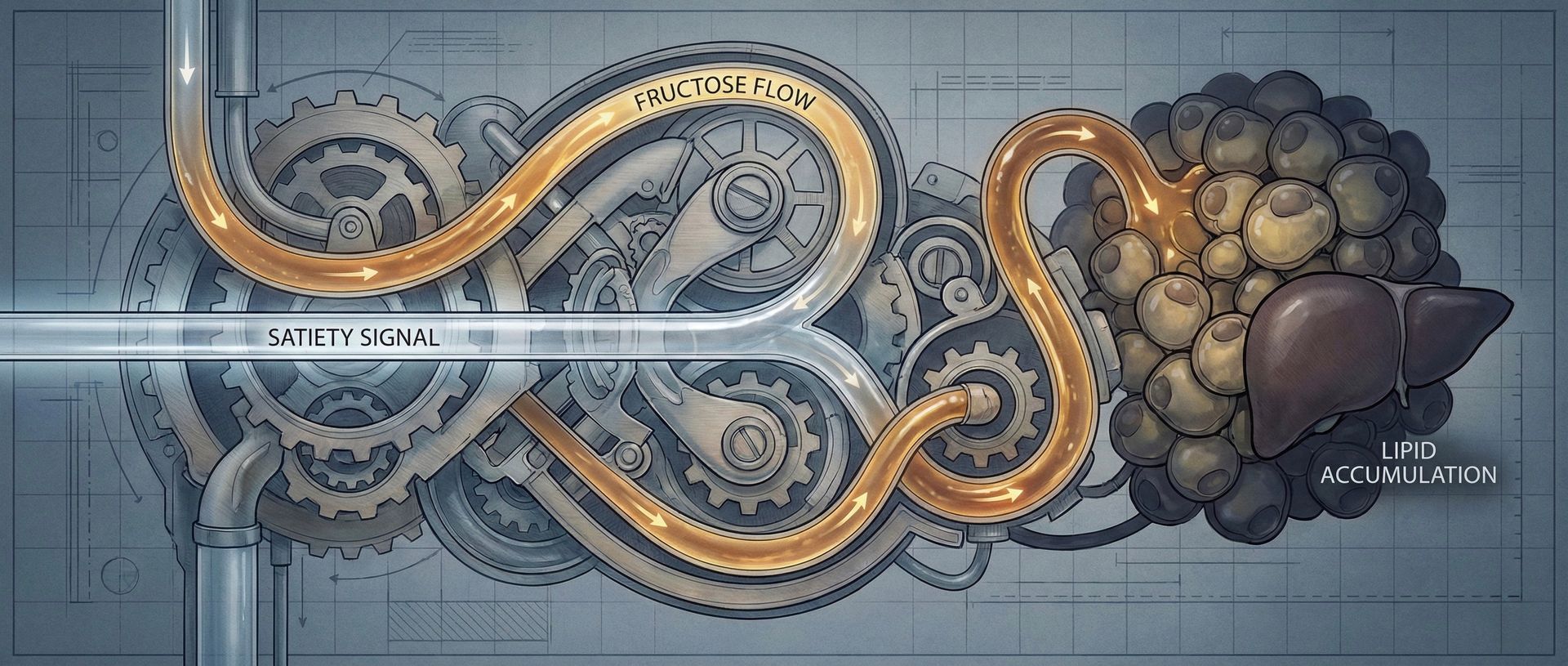
Glucose is metabolized throughout your body. It triggers insulin, which triggers leptin, the hormone that tells you you're full. Fructose works differently. It bypasses this system entirely, processed almost exclusively by the liver. No insulin spike. No satiety signal. Guests don't get the cue to slow down, and when they feel the effects later, they may blame the bar, not the sweetener.
When the liver receives a large fructose load, it converts much of it into fat through a process called lipogenesis. Put simply: high fructose intake increases triglyceride synthesis. It makes fat. Over time, this contributes to fatty liver and may raise risk for insulin resistance and cardiovascular disease.
In cocktails, the problem compounds. Alcohol and fructose both require the liver, but alcohol takes priority. While the liver handles the tequila, the fructose waits.
Waiting fructose becomes fat.

Fructose isn't poison in small amounts. Whole fruit for example, delivers it with fiber that slows absorption. The problem is liquid delivery at high doses, with nothing to slow it down. That's what's in the glass.
The Glycemic Index Illusion
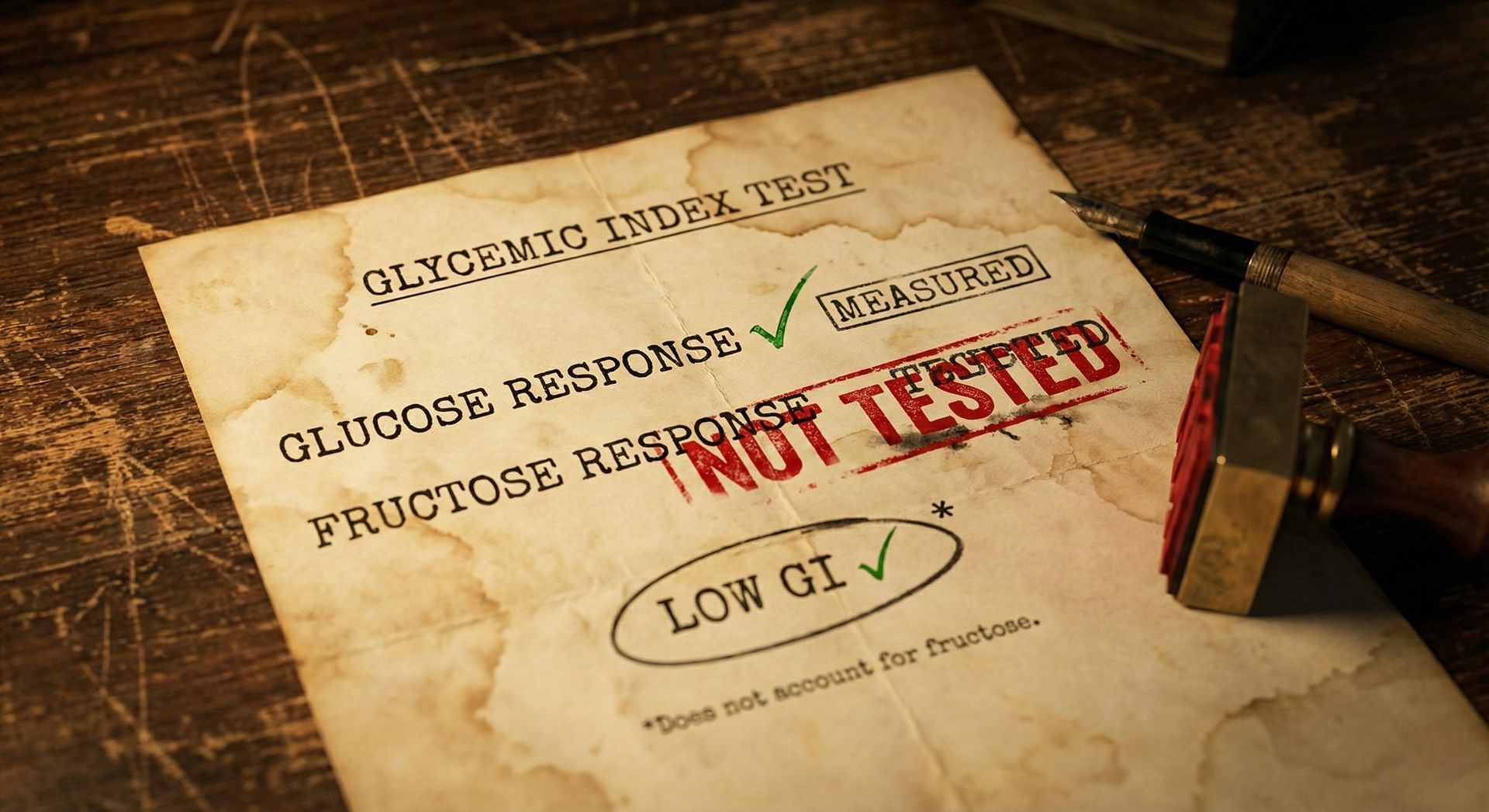
Agave rose to prominence on two selling points: the image of a natural sweetener flowing straight from the plant, and its low glycemic index score. The GI measures how quickly a carbohydrate raises blood glucose. Because fructose has minimal impact on blood glucose, agave's high fructose content yields a low GI.
It sounds scientific. It feels like a health-conscious choice. But here's what that number actually means: the glycemic index doesn't measure fructose. It only tracks glucose. Of course a syrup that's 90% fructose scores low on a test that doesn't count fructose. That's not a health benefit. That's a technicality.

A sweetener that slowly raises blood sugar while flooding your liver with fructose isn't healthy. It's just metabolizing the damage somewhere else.
Low GI does not mean low sugar, low calorie, or metabolically safe. It's one metric that tells one part of the story. For bartenders (and consumers), it shouldn't be the deciding factor.
The "Skinny" Margarita Reality Check

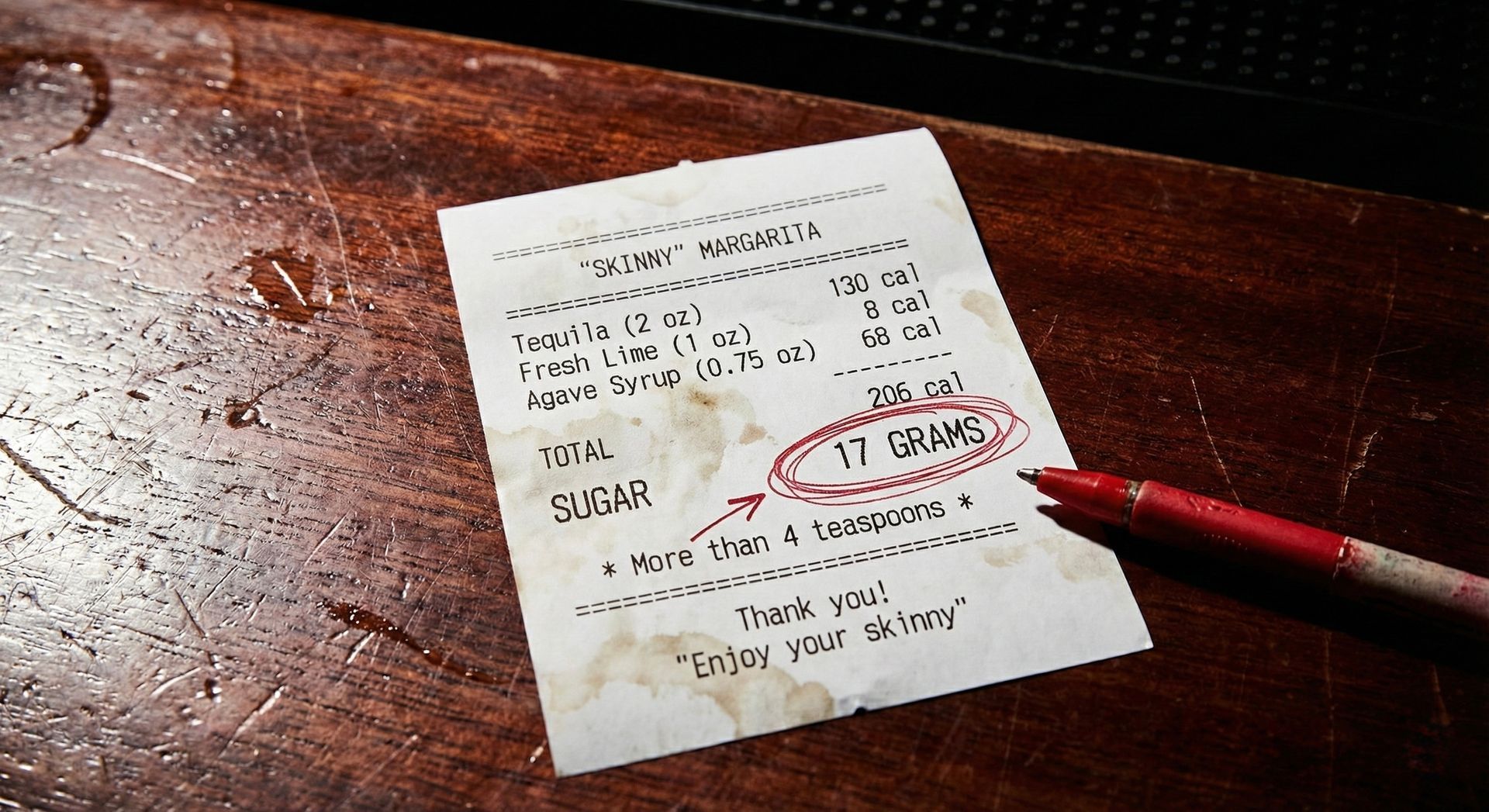
Total: 206 calories and 17 grams of sugar. That's more than four teaspoons of sugar in a drink marketed as healthy.
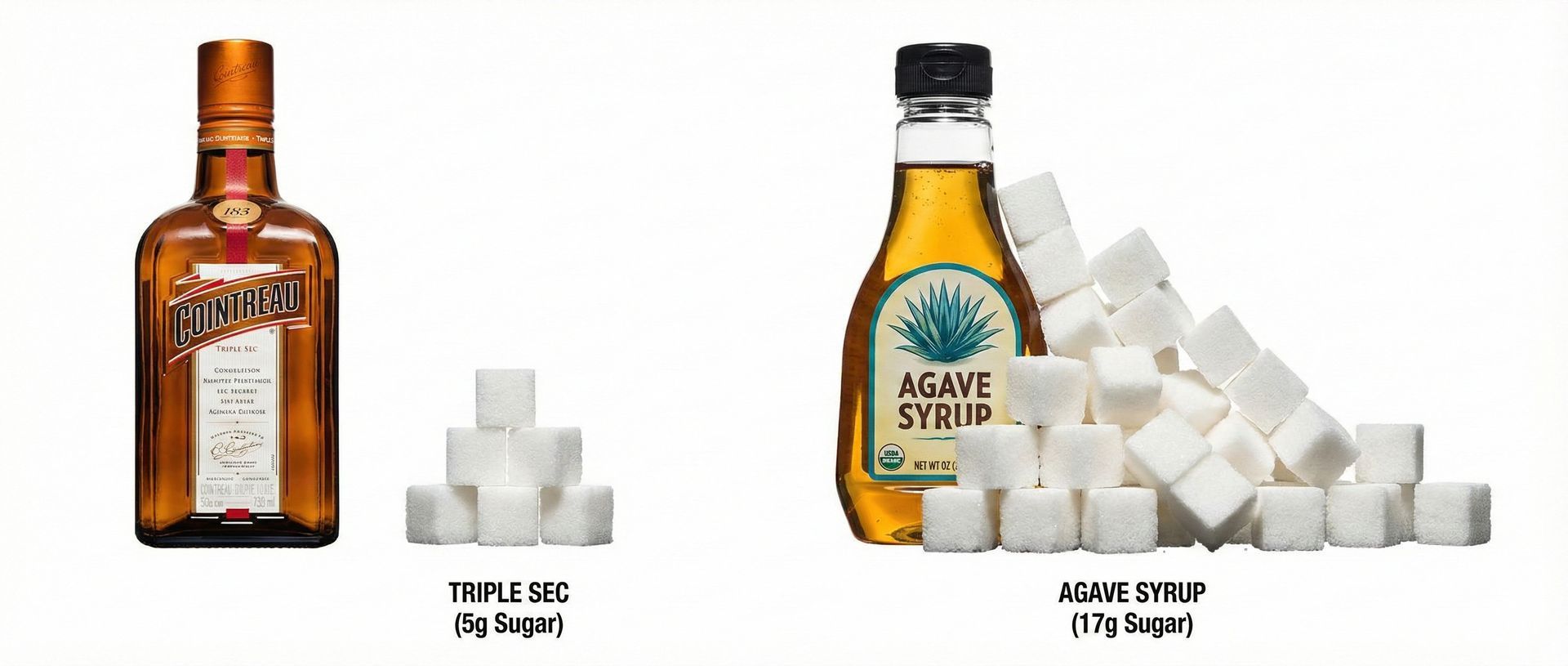
Now consider the traditional margarita. Cointreau contains about 7 grams of sugar per ounce. At 0.75 oz, that's roughly 5 grams per drink. Generic triple sec runs around 11 grams per ounce. At 0.75 oz, that's roughly 5 grams from Cointreau or 8 grams from generic triple sec.
The "skinny" version made with agave?
17 grams. More than triple the sugar of the Cointreau classic. More than double even the generic version.
Agave isn't just cheaper than Cointreau. It's marketed as healthier while delivering the opposite.
The "skinny" label isn't describing the drink's nutritional profile. It's describing a cheaper ingredient being sold at a premium because someone called it healthy.
Why This Matters Now

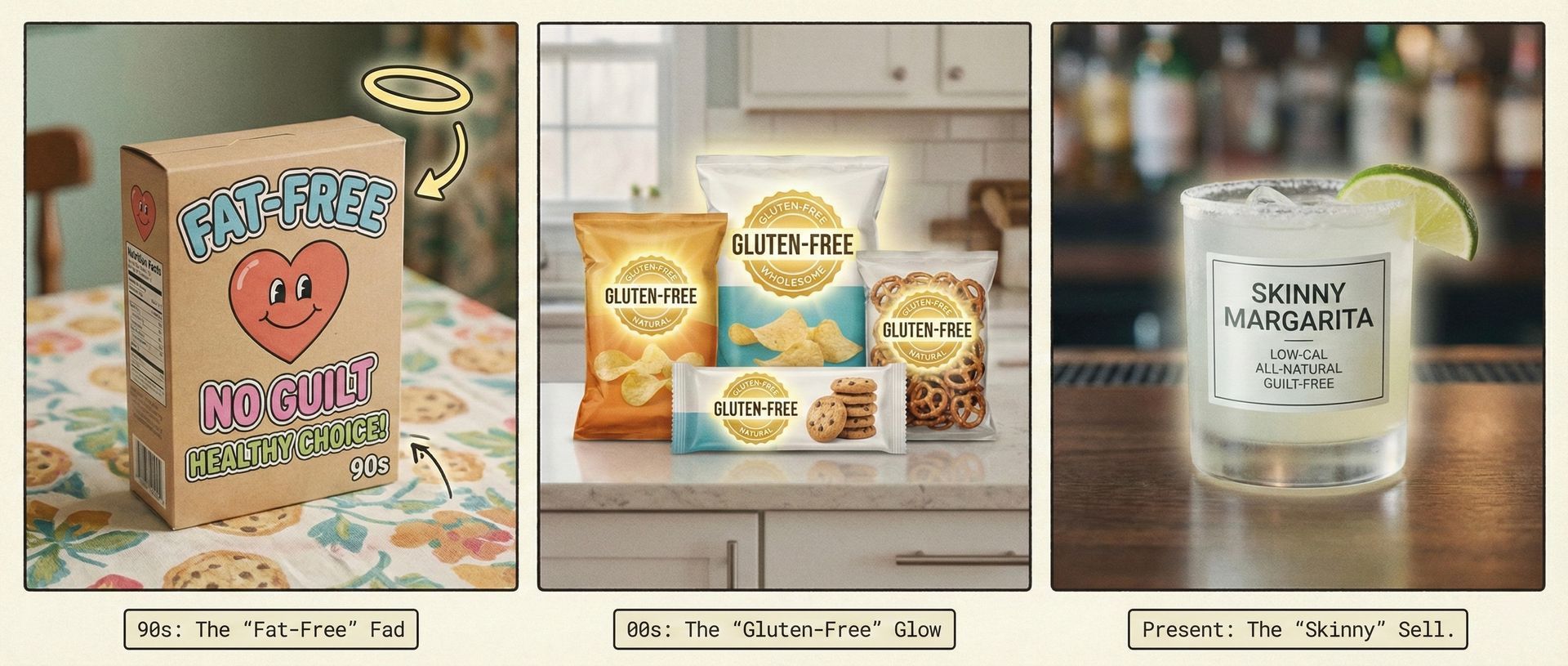
We've seen this story before. "Fat-free" cookies in the 90s were loaded with sugar. "Gluten-free" became a health halo for junk food. "Natural" meant nothing but commanded premium prices. Each of these narratives eventually collapsed under scrutiny.
The "skinny" cocktail narrative is next. Health-conscious consumers are already questioning it. Dietitians are calling it out. The truth about fructose is not obscure. It's one Google search away from any guest who wants to know.
This isn't about attacking agave. It's about being honest before your guests force the conversation. Bars that align their ingredients with their marketing build trust. Bars that don't will face the same credibility problem that "fat-free" desserts face today.
What We Did Differently
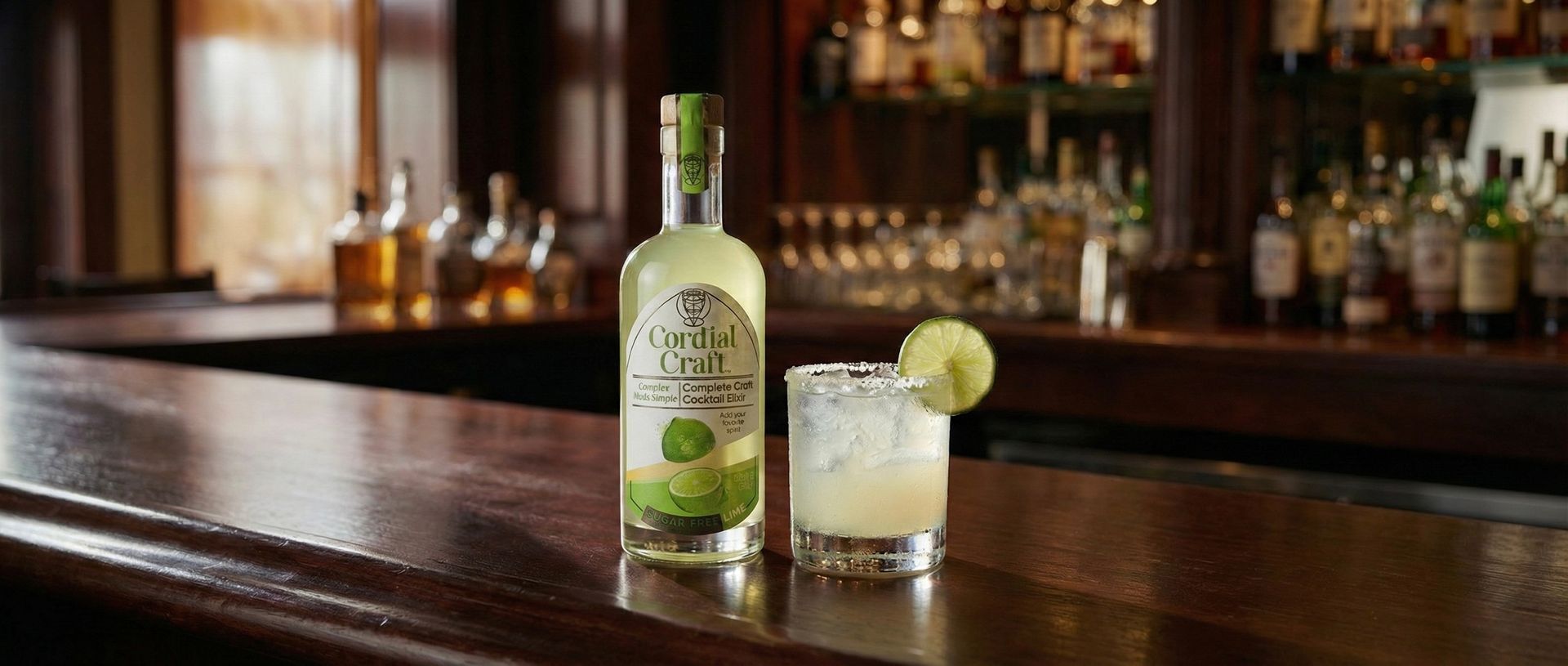
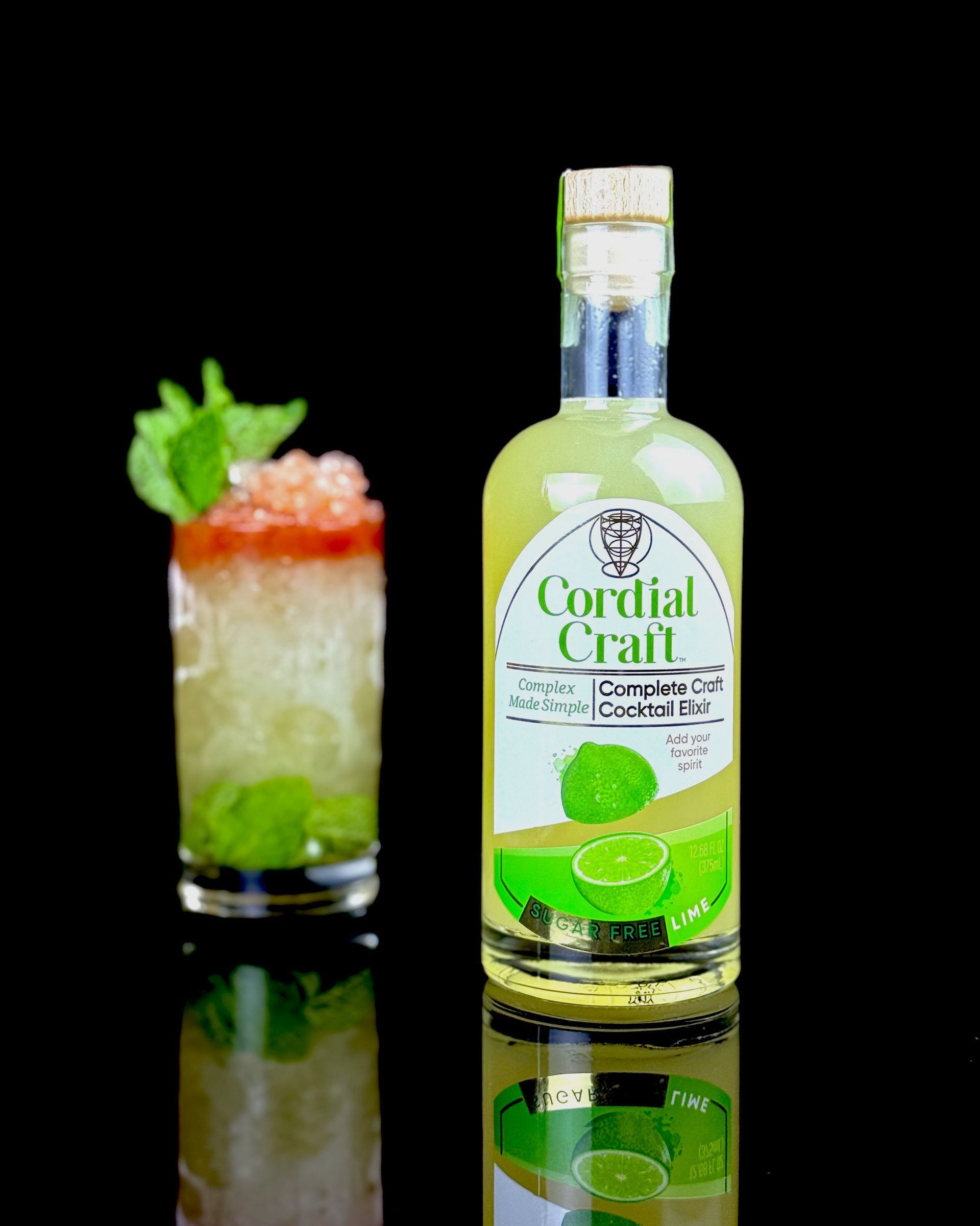
At Cordial Craft, we built a sugar-free lime cordial because we wanted drinks that actually deliver on the "skinny" promise. Before we finalized anything, we did the research. We needed to be certain we weren't creating another version of the same problem.
The formulation uses allulose, a naturally occurring rare sugar found naturally in raisins, figs, and maple syrup. Allulose isn't counted as a sugar because the body doesn't metabolize it as one. It behaves more like a fiber in terms of metabolism, passing through without being converted to energy or stored as fat.
Allulose tastes great on its own, clean and bright, but it doesn't quite deliver the full, rounded sweetness you expect in a well-made cocktail. We add a trace amount of sucralose to complete the profile, about 5% of the accepted daily intake. Sucralose has been approved in over 100 countries for more than 25 years. At our dose, you're getting complete, neutral sweetness without the metabolic burden of fructose.
The result tastes just as you'd hope: like a cocktail made with fresh lime and traditional syrup. No compromise on quality. No off-putting aftertaste. The word we hear most often is "it tastes "clean.""
In practice, our cordial replaces both the fresh lime and the sweetener in a margarita. The swap eliminates 68 calories and 17 grams of sugar per drink.

That's the difference between marketing a drink as "skinny" and actually delivering one.
The Choice Ahead
Every bar makes a decision, consciously or not, about whether their menu language matches their ingredients. "Skinny" is a promise. Agave doesn't keep it.
The bar industry has always evolved. A decade ago, the craft cocktail movement replaced sour mix with fresh juice. The next shift is already underway: drinks that are genuinely lighter without sacrificing what makes them worth ordering. The technology exists. The demand is clear. What's needed now is honesty about what's in the glass.
When a guest orders a "skinny margarita," they're trusting you to deliver on the name.
They deserve a drink that earns that trust.

Ready to Serve Drinks That Keep the Promise?
Try Cordial Craft's Sugar-Free Lime Cordial in your next margarita or gimlet. One bottle makes approximately 17 cocktails with consistent flavor, no measuring simple syrup, no sugar math. Your guests taste bright citrus. Your team gets speed and consistency.
Disclosure:
This article was written by Austin Davis, founder of Cordial Craft
and mixologist with an education in Kinesiology and Biomedical Science from SDSU. Product claims are based on formulation specifications and referenced nutritional research.
New Paragraph