Skinny Margarita Calories: Two Recipes Compared
The same tequila, two different mixer choices. Explore skinny margarita calories, agave sugar, serving sizes, and the details that change what is in your glass.

How many calories are in a skinny margarita, and does it still have sugar? The recipe tells the story. Here are two measured margaritas, the ingredients behind their numbers, and a few details that make cocktail labels easier to understand.
Two measured margaritas
Estimated nutrition per cocktail, for the ingredients shown here.
For both: 2 fl oz of 80-proof unflavored tequila, assuming 0 g sugar, plus ice. No particular tequila is named or verified here; check your bottle's manufacturer information. Neither example includes bitters, a rim, liqueur, or garnish. This is a recipe calculation, not an equal-sweetness tasting comparison or a description of every bar's margarita.
Recipe one
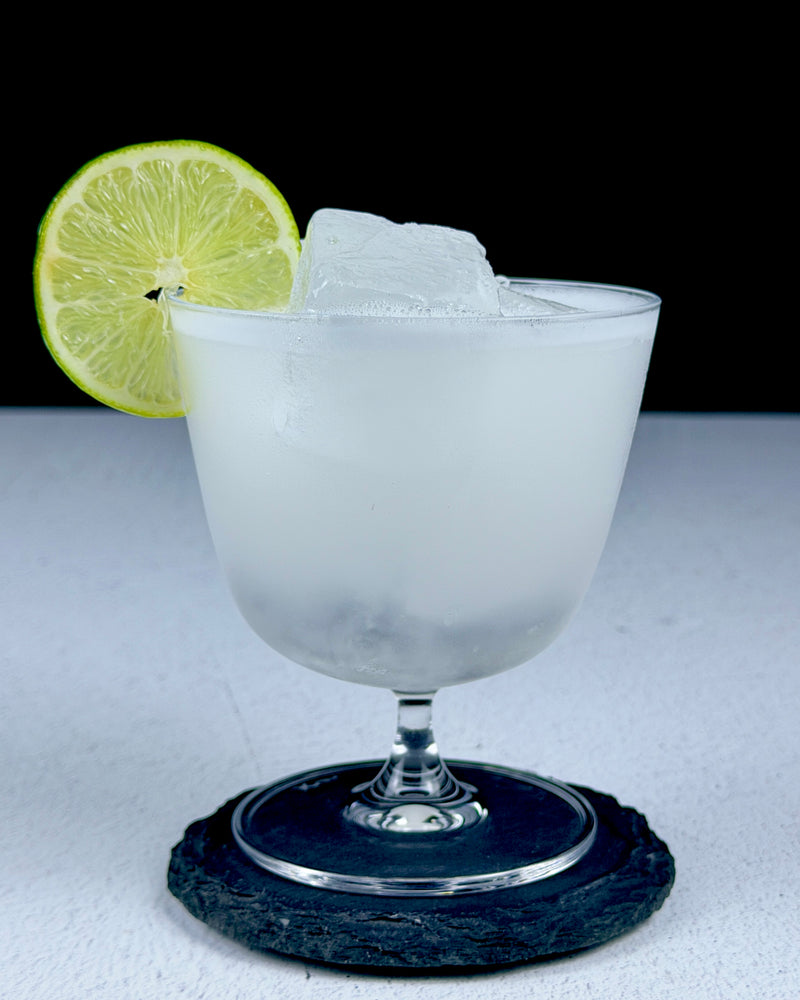
Cordial Craft Margarita
- 2 fl oz 80-proof tequila
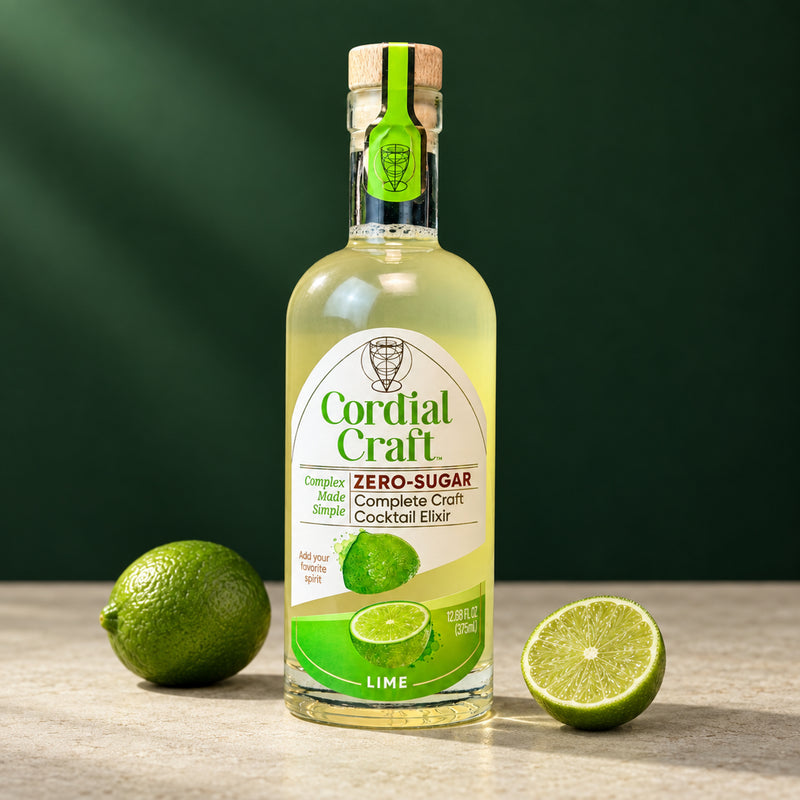
- 0.75 fl oz Cordial Craft Zero-Sugar Lime Cordial
- Ice
- Estimated calories
- 131approximately
- Estimated total sugar
- 0 gusing the rounded label value
Recipe two
Lime + agave Margarita
- 2 fl oz 80-proof tequila
- 1 fl oz raw lime juice
- 0.75 fl oz Monin Organic Agave Nectar
- Ice
- Estimated calories
- 213approximately
- Estimated total sugar
- 18.5 gapproximately
These are rounded ingredient-based estimates, not laboratory results. Our cordial label discloses less than 0.5 g sugar per 0.75 fl oz serving; 0 g does not mean absolute absence. Different brands, proofs, pours, or extras change the totals. Neither cocktail is calorie-free, and “skinny” is not a weight-loss promise.
Where our Margarita's calories come from
Nearly all estimated calories in our example come from the tequila. Our cordial's label lists 0 calories and 0 g total sugars per 0.75 fl oz, the exact cordial pour used here.
See the alcohol and cordial calculation
NIAAA equates 1.5 fl oz of 80-proof spirits with about 14 g pure alcohol. We calculate 14 × (2 ÷ 1.5) × 7 = approximately 131 calories, then use the cordial's labeled values and the tequila sugar assumption above.
The FDA Food Labeling Guide cites 7.07 calories per gram as a specific Atwater factor. We use 7 for this simplified estimate. Inputs include rounded source values; we retain intermediate arithmetic and round the final totals.
Prefer our fuller house pour? That recipe uses 2 fl oz spirit and 1 fl oz cordial. It needs its own nutrition calculation. Our Skinny Margarita recipe explains both versions and the method.
Where the lime-and-agave calories come from
The same tequila estimate is joined by approximately 7.5 calories from lime juice and 75 from the specified agave pour.
See the lime-and-agave calculation
USDA's legacy tables list raw lime juice at 60 calories and 4.09 g sugar per cup. Dividing by eight gives our 1 fl oz estimate.
Calories: [14 × (2 ÷ 1.5) × 7] + (60 ÷ 8) + (25 × 3) ≈ 213.
Total sugar: (4.09 ÷ 8) + (6 × 3) ≈ 18.5 g.
Monin advises checking the physical bottle because online nutrition information may differ from the product received.
Agave adds sweetness, not a sugar-free shortcut
Agave syrup brings the sugar and calories listed for the product you choose. Less syrup contributes less; more contributes more. A low glycemic-index description does not make it sugar-free. The useful question is how much is in this drink.
Beyond the mixer
The pour matters. So does the proof.
A larger pour and a stronger spirit both change alcohol calories before the mixer goes in. In the U.S., proof is twice the alcohol percentage: 80 proof is 40% ABV; 100 proof is 50%.
1.5 fl oz · 80 proof
98approximate alcohol calories
2 fl oz · 80 proof
131approximate alcohol calories
2 fl oz · 100 proof
163approximate alcohol calories
Calculated with the same simplified method above, for alcohol alone. Sugar or other ingredients in the spirit or cocktail are additional.
One cocktail is not always one standard drink. The 2 fl oz of 80-proof tequila in both recipes equals about 1⅓ U.S. standard drinks, using NIAAA's definition. Changing the mixer does not change that alcohol amount.
Get to know your cordial label
We built Cordial Craft to bring lime flavor, acidity, sweetness, and body together. Here is what our bottle label says about the cordial itself.

Per 0.75 fl oz serving
- Calories
- 0
- Total sugars
- 0 g
- Added sugars
- 0 g
- Total carbohydrate
- 7 g
These are cordial values, not the nutrition of every cocktail. See the product and ingredients.
A label serving is your starting point
Nutrition Facts refer to the stated serving, not any amount you pour. Labels also round: less than 5 calories or 0.5 g sugar per serving may display as zero. Scaling a rounded zero does not establish the exact amount in a larger pour.
Carbohydrate is not another word for sugar
FDA counts allulose in Total Carbohydrate while allowing its exclusion from Total Sugars and Added Sugars, at 0.4 calories per gram. Our label does not allocate carbohydrate by ingredient: 7 g carbohydrate does not mean 7 g sugar, fiber, or allulose.
Zero sugar and no added sugar are different
Under U.S. food-label rules, zero sugar concerns sugar content and other labeling conditions; no added sugar also depends on ingredients and production. A rounded 0 g Added Sugars declaration is not the same as a “no added sugar” claim. Neither phrase means calorie-free.
At the bar, ask about the recipe
- What provides the sweetness, and how much goes in?
- Does it include orange liqueur, flavored spirits, or a sweetened rim?
- What is the tequila pour and proof?
- Are nutrition figures available for this recipe?
Remember the finishing touches, too. Juice, fruit, bitters, liqueurs, and sweetened rims can change the totals. Include the parts you actually consume rather than calculating only the spirit and mixer.
Writing the menu? Keep ingredient brands, pours, proof, and consumed garnishes with the recipe. Use current labels, identify calculations as estimates, and recheck the figures and claim conditions after substitutions.
Sources and calculation notes
Sources reviewed October 6, 2026. Links beside each explanation lead to NIAAA, FDA, TTB, federal labeling rules, USDA's legacy raw-lime-juice tables, and Monin's product information. Cordial Craft figures are transcribed from the bottle label shown above. These ingredient-based estimates include rounded inputs, not laboratory measurements of the finished cocktails.
From Cordial Craft: we make the cordial in this comparison. Sharing the ingredients, measures, and assumptions is how we keep it useful and honest. This is not a blind tasting or a ranking of brands, and we are not affiliated with Monin.
From the numbers to the glass
Make your next Margarita with confidence.
You know what goes into the estimate. Now put the recipe to work, or explore how a lime cordial brings a cocktail together.
Choosing your mixer? Read our Margarita mix guide.